

Mutant City: On Partial Transformations in Three Johannesburg Narratives
| Author | |
|---|---|
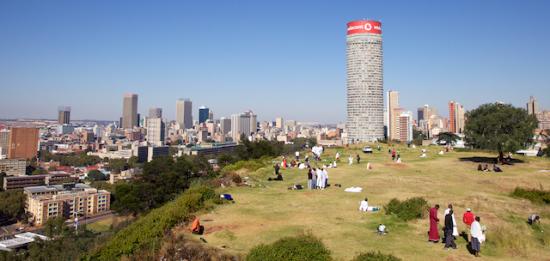
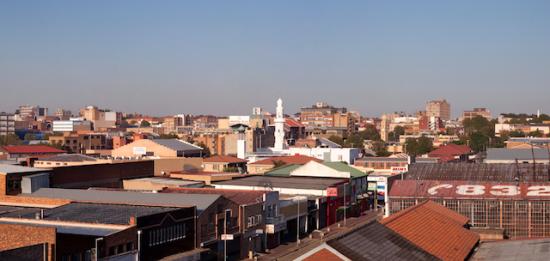
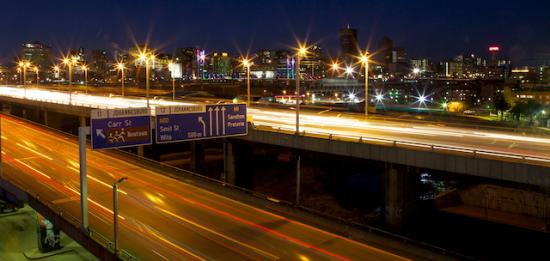
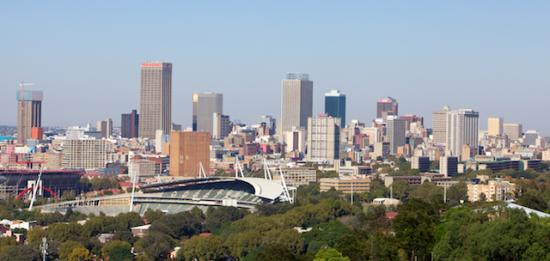
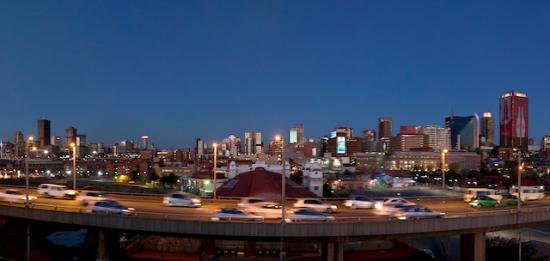
| Abstract | Since the fall of the apartheid regime, critical discourse on and popular imaginations of South Africa have focused with renewed intensity on the city of Johannesburg: its schizophrenic social organization, its fragmented geography, its “citadelization,” its “architecture of fear,” and its development within networks of global capital, all indexes of the ultimate failure of the nation to move beyond its segregated past. In this essay, I will focus on representations of Johannesburg's mutancy, a concept that foregrounds its temporal movements rather than its spatial calcification. In particular, I examine the uses to which the tropes of mutation and the figure of the mutant are put in a number of recent Johannesburg narratives. Mutation here is a logic of discontinuous transformation, distinct from “hybridity,” concerned less with mimicry and in-betweenness than with emergent forms of life in spaces where ideological forces have ceded to material ones. The speculative mutations in these texts give body to various forms of emergent, unconceptualized, or fantastic subjectivities, homologous with but not reducible to the “real” mutations taking place in South African urban space. I am ultimately interested in how these subjectivities inform various imaginations of futurity—catastrophic, deconstructive, and regenerative—within a country in which, as Imraan Coovadia has written, “the conditions for transcending the present are hardly to be conceived” (51). |
| Year of Publication | 2018
|
| Journal | Novel
|
| Volume | 51
|
| Number of Pages | 417–437
|
| Date Published | 11/2018
|
| ISSN Number | 0029-5132
|
| URL | https://doi.org/10.1215/00295132-7086462
|
| DOI | 10.1215/00295132-7086462
|
| Download citation |